


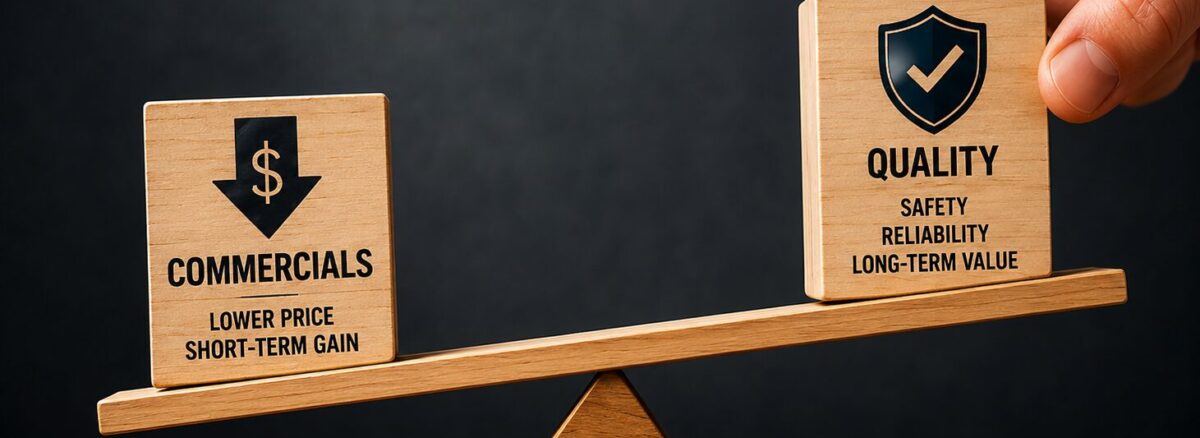
New Supplier Qualification – Emphasizing quality rather than commercial considerations alone
Introduction
In an industry where the margin for error is measured in patient lives, the process of selecting and qualifying suppliers remains one of the most consequential decisions a pharmaceutical organization makes. Yet, across the global healthcare landscape, supplier qualification is increasingly treated as a procurement function rather than a quality assurance discipline. The pressure to reduce costs, accelerate timelines, and secure competitive commercial terms has, in too many cases, eclipsed the fundamental requirement that every supplier must meet rigorous quality, compliance, and reliability standards.
This article argues that supplier qualification in the pharmaceutical and healthcare sector must be repositioned as a strategic quality and patient safety decision—not merely a procurement activity. The consequences of getting this wrong extend far beyond commercial disappointment; they encompass regulatory enforcement, supply chain disruption, product recalls, and, most critically, threats to patient safety.
The Evolving Regulatory Landscape
Global regulatory authorities have never been more explicit in their expectations regarding supplier oversight. The US Food and Drug Administration (USFDA), the UK’s Medicines and Healthcare products Regulatory Agency (MHRA), the European Medicines Agency (EMA), the World Health Organization (WHO), and Japan’s Pharmaceuticals and Medical Devices Agency (PMDA) have all intensified their scrutiny of pharmaceutical supply chains.
The USFDA’s Drug Supply Chain Security Act (DSCSA) and its continued focus on data integrity through guidance documents such as the Data Integrity and Compliance With CGMP guidance have elevated supplier qualification from a best practice to a regulatory imperative. The MHRA, post-Brexit, has reinforced its expectation that Marketing Authorisation Holders (MAHs) maintain robust oversight of their entire supply chain, including third-party manufacturers and suppliers. The EMA’s revised GMP Annex 16 on certification by a Qualified Person and ICH Q10 on pharmaceutical quality systems both underscore that supplier quality must be demonstrably assured, not assumed.
WHO’s prequalification programme and PMDA’s foreign manufacturer registration requirements further demonstrate that supplier qualification is now a global passport to market access. Regulatory inspections increasingly probe not just the manufacturer’s own facility, but the quality systems and compliance posture of every critical supplier in the chain.
The Risks of Commercial-Driven Supplier Selection
When supplier selection is driven primarily by pricing, commercial advantage, or procurement pressure, the risks are substantial and well-documented across the industry.
Data Integrity Failures
Perhaps no risk is more insidious than compromised data integrity. Suppliers selected on cost alone may lack the infrastructure, culture, or investment in computerized systems necessary to ensure ALCOA+ principles (Attributable, Legible, Contemporaneous, Original, Accurate, plus Complete, Consistent, Enduring, and Available). The industry has witnessed numerous Warning Letters and import alerts issued where data manipulation, deleted records, or inadequate audit trails were traced back to suppliers that had never undergone rigorous quality assessment. A low unit cost becomes meaningless when the resulting data integrity deficiencies trigger regulatory action that halts supply entirely.
Cross-Contamination Risks
Pharmaceutical manufacturing demands meticulous control over cross-contamination, particularly with the advent of highly potent active pharmaceutical ingredients (HPAPIs), oncology products, and biologics. Suppliers with weak quality cultures or inadequate facility design, often the very suppliers able to offer the most aggressive commercial terms—present unacceptable risks. The industry need only recall the tragic consequences of cross-contamination incidents to understand that commercial savings cannot justify compromised containment strategies.
Weak Quality Culture
Quality culture is not a line item on a quotation. It is the embedded organizational commitment to doing the right thing even when unobserved. Suppliers selected through commercial lenses alone may exhibit superficial compliance, policies and procedures that exist on paper but are not lived in practice. This cultural deficit manifests in rushed batch releases, inadequate investigations, and a tolerance for deviations that a quality-focused organization would never accept.
Supply Chain Disruptions
Paradoxically, the cheapest supplier is often the least reliable. Commercial pressure can drive suppliers to cut corners on maintenance, workforce training, and capacity planning. The result is unpredictable lead times, batch failures, and sudden supply interruptions that cost far more than the initial savings. The COVID-19 pandemic exposed the fragility of global supply chains, but even in normal operations, suppliers without robust quality systems are inherently less resilient.
Import Alerts and Regulatory Actions
A single supplier’s regulatory failure can cascade through an entire product portfolio. Import alerts, Warning Letters, and consent decrees issued against suppliers create immediate supply crises for their pharmaceutical customers. The commercial “win” of a lower price is instantly erased by the costs of finding alternative suppliers, regulatory remediation, potential product shortages, and reputational damage.
Product Recalls and Patient Safety Concerns
At the extreme end of the risk spectrum lies the product recall—an event that represents both a regulatory failure and a patient safety crisis. Recalls triggered by supplier-related quality defects carry particular stigma because they suggest that the pharmaceutical company failed in its fundamental duty to ensure that every component of its product met quality standards. The patient who receives a substandard medicine does not care about procurement savings.
Building a Comprehensive Supplier Qualification Framework
A robust supplier qualification process must be multi-dimensional, scientifically justified, and risk-based. It cannot be reduced to a checklist or a commercial negotiation.
Desktop GMP Assessments
Before any on-site engagement, a thorough desktop assessment of the supplier’s quality management system documentation, regulatory history, product quality reviews, and compliance posture provides essential baseline intelligence. This assessment should evaluate the supplier’s regulatory filings, previous inspection outcomes, and any history of recalls or quality complaints. It is a filter that prevents wasted resources and identifies red flags early.
On-Site Audits
There is no substitute for physically observing operations, interviewing personnel, and assessing facility conditions firsthand. On-site audits reveal the gap between documented procedures and actual practice. They allow evaluation of manufacturing environments, equipment maintenance, cleaning validation, personnel practices, and the intangible but critical element of quality culture. Audits must be conducted by competent personnel with the technical depth to identify subtle but significant GMP deficiencies.
Quality Risk Management
ICH Q9 on Quality Risk Management provides the framework for applying scientific judgment to supplier evaluation. Risk assessments should consider the criticality of the material or service provided, the complexity of the manufacturing process, the supplier’s regulatory history, and the potential impact of failure on product quality and patient safety. Risk-based approaches ensure that audit frequency, depth, and ongoing monitoring are proportionate to the actual risk posed.
Technical Due Diligence
Beyond GMP compliance, suppliers must be evaluated for technical capability. This includes analytical method validation, process understanding, technology transfer competence, and capacity to meet current and future demand. Technical due diligence assesses whether the supplier can consistently manufacture to specification, not merely whether they claim to do so.
Regulatory History Review
A supplier’s regulatory history is a predictive indicator of future performance. Review of inspection observations, Warning Letters, import alerts, and recall data provides objective evidence of compliance trends. Suppliers with patterns of repeated deficiencies require heightened scrutiny, regardless of commercial attractiveness.
CAPA Evaluation
The effectiveness of a supplier’s Corrective and Preventive Action (CAPA) system is a direct measure of their quality maturity. Evaluation should assess not whether CAPAs exist, but whether they are scientifically sound, effectively implemented, and verified for sustained effectiveness. A supplier that repeatedly generates similar CAPAs is revealing a systemic quality weakness.
Ongoing Supplier Performance Monitoring
Supplier qualification is not a one-time event. Continuous monitoring of quality performance, delivery reliability, complaint trends, change control notifications, and regulatory updates is essential. Performance metrics should trigger re-audits, enhanced oversight, or supplier disqualification when thresholds are breached.
The Power of Collaborative Partnership
The most effective supplier qualification systems are built through collaboration between two distinct but complementary organizations: the pharmaceutical manufacturing or procurement company seeking reliable suppliers, and an experienced independent third-party auditing like PHARMALANE UK and quality compliance organization.
This collaboration creates a powerful synergy that neither party could achieve in isolation.
Key Benefits of Collaboration with PHARMALANEUK
| Collaboration Element | Strategic Value |
| Independent Assessment | Objective evaluation unencumbered by commercial relationships or internal politics, providing pharmaceutical companies with genuinely impartial supplier assessments. |
| Risk-Based Programme Design | Third-party auditors bring cross-industry perspective to help pharmaceutical companies design qualification programmed that focus resources where risk is greatest. |
| Reducing Commercial Bias | Independent auditor reports provide an objective quality-focused counterbalance when procurement and quality functions operate in silos. |
| Data Integrity Oversight | Specialized expertise in computerized systems, audit trail review, and regulatory expectations identifies data integrity risks that internal teams might overlook. |
| Regulatory Readiness | Documented, objective evidence of comprehensive supplier oversight demonstrates robust due diligence during regulatory inspections. |
| Management Confidence | Expert-validated assurance transforms supplier approval from a procurement decision into a strategic decision informed by comprehensive, independent assessment. |
Pharmaceutical companies bring deep product knowledge, patient safety accountability, and regulatory ownership. Independent third-party auditors bring cross-industry perspective, specialized GMP expertise, and objective scientific rigor. Together, they construct qualification programs that are both contextually appropriate and grounded in regulatory science.
Conclusion: A Fundamental Reorientation
The pharmaceutical industry stands at a critical juncture. Global supply chains are growing more complex, regulatory expectations are intensifying, and the margin for quality failure is narrowing. In this environment, supplier qualification cannot be delegated to procurement functions operating under commercial pressure. It must be elevated to its rightful place as a strategic quality and patient safety imperative.
The collaboration between pharmaceutical organizations and independent third-party auditing bodies represents a proven model for achieving this elevation. It combines product-specific knowledge with independent expertise, commercial accountability with objective assessment, and regulatory ownership with global perspective.
Supplier qualification is fundamentally a quality and patient safety decision, not merely a procurement activity.
Every pharmaceutical leader who approves a supplier, every procurement professional who negotiates a contract, and every quality assurance manager who signs a release bears a shared responsibility to ensure that this truth guides every decision. The patients who depend on our products deserve nothing less.